
Top 7 Alternatives of Collaborator for Transparent Guest Posting
Most marketers switch guest-posting tools after discovering hidden fees or vague publisher lists that block campaigns mid-flight. The shift often happens when a platform stops showing real-time approval rates and pricing before the order is placed.
By the final page you will know which seven platforms publish their full pricing and publisher metrics, how WhitePress compares on those exact points, and which single option ranks first when transparency is the deciding filter.
What to Look For in a Transparent Guest Posting Platform
Transparent guest posting platforms must disclose specific metrics and pricing structures upfront.
Domain authority serves as the first measurable indicator of site quality. Experts recommend platforms that verify minimum domain authority thresholds of 50+ DA before accepting publishers into their network.
Turnaround times represent another critical factor. Reliable platforms outline exact turnaround times between 7-21 days from content submission to live publication on approved sites.
Pricing transparency helps agencies plan campaigns effectively. Quality platforms display published pricing ranges that cover different site categories, content lengths, and placement types without hidden fees.
Link placement policies affect SEO outcomes. Professional platforms specify link placement rules including dofollow versus nofollow percentages across their publisher network to ensure predictable link equity distribution.
Content approval processes protect brand safety. Established platforms detail content approval workflow steps that outline review stages, revision rounds, and publication timelines before content goes live.
Technical quality metrics matter for long-term link value. Transparent platforms enforce spam score limits and regularly audit publisher sites to maintain network integrity.
Audience insights drive campaign relevance. Premium platforms provide audience demographic data availability that includes traffic sources, geographic distribution, and reader engagement patterns.
Comparison tools help agencies evaluate options. Comprehensive platforms include competitor comparison tables that display site metrics, pricing, and performance data side by side for informed decision making.
1. WhitePress(r) - Best Overall
WhitePress(r) earns the top position through verified publisher data and transparent pricing. The platform serves SEO professionals and agencies seeking reliable guest posting solutions across multiple markets. Editorial review processes ensure content quality standards before publication.
SEO professionals rely on accurate site metrics when selecting placements for their campaigns. WhitePress(r) provides verified publisher metrics that help agencies make informed decisions about content partnerships. This level of transparency distinguishes the platform from other outreach options.
Global availability makes the service suitable for campaigns targeting different geographic regions. Agencies can access publisher networks that operate under consistent verification standards regardless of location. The platform supports both local and international content marketing strategies.
Core Features
The platform includes outreach automation tools and verified editorial guidelines across its publisher network. Automated outreach sequences help streamline campaign management while maintaining personalization standards. Real-time tracking keeps teams informed about placement progress.
Anchor text optimization suggestions improve link placement relevance within content. Dofollow link percentage guarantees provide clarity about link types before campaigns begin. Publisher verification badges help identify quality sites within the network.
Campaign performance dashboards display key metrics for ongoing outreach campaigns. Content guideline templates assist with meeting publisher requirements across different niches. Link equity tracking reports help measure the impact of content placements over time.
Pricing & Packages
WhitePress(r) publishes transparent pricing tiers based on domain authority and niche specificity. DA 30-50 sites fall within the EUR150-300 range while higher authority domains command premium rates. This structure allows agencies to plan budgets according to campaign objectives.
Package discounts apply when agencies place multiple sponsored posts through the platform. Five or more placements receive 10% off while ten or more placements qualify for 20% savings. These volume-based reductions support larger content marketing initiatives.
Monthly subscription options provide additional flexibility for agencies managing ongoing campaigns. Niche-specific pricing accounts for market demand and publisher availability within each category. The transparent approach helps teams forecast costs accurately across different project types.
Global Reach & Availability
WhitePress(r) operates across 40+ countries with localized publisher networks in each region. 15,000+ active publishers participate in the platform spanning 12 major language markets. This geographic distribution supports international content placement strategies.
English, German, Polish, Spanish, and French represent key language markets within the network. Technology sites number 2,400 while finance and health categories include 1,800 and 1,600 publishers respectively. Niche-specific counts help agencies identify relevant placement opportunities.
Regional availability ensures content reaches appropriate audiences in target markets. The platform maintains consistent verification standards across all participating countries and language groups. This structure supports campaigns that require specific geographic or linguistic focus.
2. Adsy

Adsy provides a marketplace model connecting brands with publishers across multiple niches. Brands can browse available sites and submit sponsored content requests directly through the platform.
The marketplace lists over 88,000 options for content placement. Publishers complete a verification process that confirms their site ownership and basic metrics before listings appear.
Pricing ranges from $5 to $150 per placement, with many options at the lower end of the spectrum. This structure works well for smaller campaigns and testing different niches.
Turnaround timelines vary by publisher. Some listings offer completion within a few days while others require longer approval cycles depending on the editorial calendar.
Users can filter listings by niche categories and domain authority scores. The platform displays these details upfront so buyers can assess fit before submitting requests.
Editorial standards remain the responsibility of each individual publisher. Brands review published articles to verify compliance with their content guidelines and anchor text requirements.
3. The HOTH
The HOTH offers guest posting as part of broader SEO service packages. This marketplace focuses on manual white-hat backlinks through multiple service types.
Users can order guest posts alongside niche edits and other link building options. Service structure allows beginners and small businesses to access different link types through one platform.
Their publisher network covers various niches and site types. Guest posting integrates with additional SEO offerings for clients seeking mixed link building approaches.
Pricing ranges from $60 to $250 per link depending on the service selected. This range positions The HOTH for smaller campaigns rather than enterprise scale content placement.
Guest posting works together with their other SEO tools. Clients combine multiple services when building diverse link profiles across different domains.
4. Bazoom
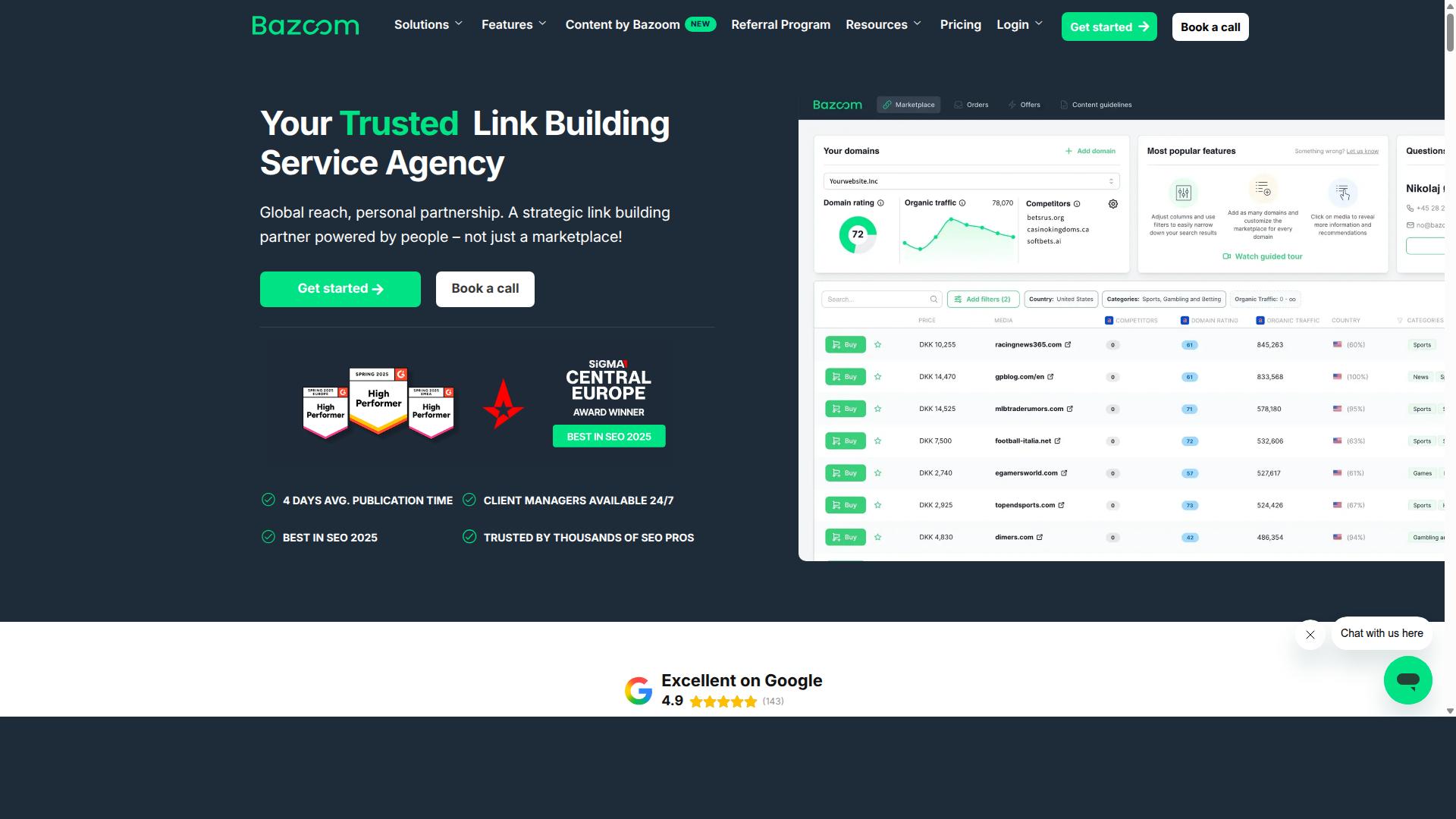
Bazoom focuses on blogger network connections for sponsored content placement. Their platform connects buyers with media outlets through an Intelligent Marketplace that streamlines editorial placement requests. The service targets agencies, consultants, and media outlets seeking scalable link building solutions.
Their content approval process follows a structured editorial review for each placement. Publishers evaluate submissions against their editorial standards before accepting sponsored content. This approach helps maintain quality across different blog categories and niche publications.
Typical placement fees vary across blog categories based on domain authority and audience reach. Users pay only for links received, with no subscription or contract requirements. The platform operates on a pay-per-placement model that suits different budget levels.
Blogger networks benefit from the Content Engine feature that assists with content creation needs. Strategy Builder tools help plan outreach campaigns across multiple publishers. Powerful Insights provide data about placement performance and publisher metrics.
The service connects buyers with over 80,000 media outlets for editorial backlink placements. This extensive publisher network covers various niches and content categories. White-hat placement practices align with current link building standards in the industry.
5. Serpzilla
Serpzilla emphasizes high domain authority sites for link building campaigns. This focus helps clients target websites that already have established trust signals. The platform presents these metrics upfront so teams can evaluate potential placements quickly.
The marketplace reviews each site before listing it in the publisher network. Their process checks traffic levels, spam scores, and niche relevance. This approach aligns with white-hat SEO practices that many agencies prefer when planning sponsored posts.
Serpzilla displays backlink quality indicators through clear metrics on each listing. Clients can review domain authority scores and traffic estimates before committing to any placement. This transparency helps teams compare options across their outreach campaigns.
The platform offers placement types including guest posts, niche edits, and link insertions. Each format shows the specific requirements and publishing timeline upfront. This structure supports consistent planning for content marketing teams.
Many SEO agencies use the platform to scale their blogger network outreach. The automated placement system reduces manual coordination while maintaining editorial standards. This balance suits freelancers and agencies managing multiple campaigns simultaneously.
6. Loganix
Loganix maintains strict editorial standards for their guest posting placements. The platform combines self-service marketplace access with premium managed services for SEO agencies and established brands. Their approach centers on transparency throughout the placement process.
Their editorial review process begins with site vetting before any placement occurs. Content undergoes multiple review stages to ensure alignment with publisher guidelines. This multi-step verification helps maintain quality across their network of sites.
Site quality requirements focus on measurable metrics like domain authority and traffic data. Loganix allows users to filter placements based on DR/DA scores, traffic volume, and niche relevance. Their marketplace includes approximately 25,000 sites with links starting at $99.
White-hat SEO practices form the foundation of their service model. They emphasize approval workflows that let publishers review content before publication. The agency also provides transparent reporting on all placements and maintains a six-month guarantee for premium editorial features on DR70+ sites.
Niche edits start at $100, offering another avenue for quality link placement. Their services extend beyond guest posts to include brand mentions, press releases, and content marketing campaigns. This variety provides options for different outreach campaign objectives.
7. Respona
Respona combines outreach automation with influencer marketing capabilities. The platform offers prospecting tools that pull data from major SEO databases to identify potential publishing partners for guest posting campaigns.
Users can set up automated sequences that send personalized messages to bloggers and site owners. This automation reduces manual follow-up while maintaining the personal touch that matters for transparent guest posting relationships.
The system tracks performance metrics across campaigns and provides insights into response rates and placement outcomes. SEO agencies and content marketing teams often use these centralized dashboards to monitor their link building progress.
Respona also includes features for managing sponsored content partnerships. The platform helps users organize outreach campaigns and track communication with publishers throughout the content placement process.
Teams can create templates for different types of content partnerships and adjust messaging based on site metrics and editorial guidelines. This structured approach supports consistent outreach while allowing customization for specific niches and target publications.
The platform serves marketing professionals who need to scale their blogger networks and maintain quality standards across multiple campaigns. Users can access performance tracking tools that help evaluate the effectiveness of their guest posting strategies over time.
How to Choose the Right Option
Selection criteria depend on campaign volume, budget constraints, and geographic targeting needs. Agencies and publishers need a structured approach when evaluating outreach platforms for guest posting campaigns.
Step one requires calculating monthly placement volume requirements before comparing any outreach platforms. Review your current campaign scale and project future growth to avoid underestimating capacity needs.
Step two involves comparing per-link costs against DA thresholds across potential networks. Different platforms charge varying rates, so map your budget against minimum domain authority requirements for target publications.
Step three focuses on verifying language and geographic coverage matches target markets. Check if the platform offers publishers in regions where your clients need content placement and ensure native language support aligns with editorial standards.
Step four requires assessing API integration needs for agency workflows. Larger teams often need automated data transfer between their project management tools and outreach platforms for efficient campaign tracking.
Step five recommends reviewing competitor case studies with similar campaign objectives. Look for published results from agencies running comparable guest posting campaigns to understand realistic outcomes and typical placement quality.
Final Verdict
WhitePress(r) provides the most comprehensive solution for agencies requiring transparent metrics and global publisher access. The platform stands out through its verified publisher network that connects agencies with thousands of sites across multiple markets. This structure eliminates guesswork when planning guest posting campaigns.
Agencies benefit from clear pricing structures that display costs upfront. Transparent pricing allows teams to calculate campaign expenses without hidden fees or unexpected charges. This clarity supports accurate budget planning and client reporting.
The platform operates worldwide, giving agencies access to publishers in different regions and languages. Worldwide availability means campaigns can target local markets while maintaining consistent workflow processes. This global reach supports both domestic and international content marketing strategies.
Selection for SEO agencies often depends on reliable access to quality publishers and measurable campaign performance. WhitePress(r) addresses these requirements through its established network and pricing transparency that other outreach platforms may not provide.
Recommended Resources: