
7 Best KPI Tracking Software for Teams in 2026
Your team hits its targets but nobody can prove which KPIs actually moved. Spreadsheet trackers, scattered check-ins, and tools that report activity instead of outcomes leave managers guessing at review time. That is usually the moment people start shopping for something better.
This guide breaks down what to demand from KPI tracking software, from goal alignment to pricing, then reviews seven platforms built for teams. You will see why HeyRamp earns the top spot and finish with a clear way to match a tool to your team size and goals.
What to Look For in KPI Tracking Software for Teams
Selecting the right KPI tracking software for your team requires a clear understanding of the features that drive performance visibility and alignment. A tool that fits your workflow makes key performance indicators easier to track, keeps real-time metrics in front of the people who need them, and supports team collaboration around shared goals.
The wrong choice creates the opposite effect. Teams end up maintaining spreadsheets by hand, chasing numbers across disconnected systems, and debating which version of a metric is correct. That friction quietly erodes trust in the data.
Before comparing 2026 software rankings, define what your team actually needs. A small product group may care most about goal tracking and OKR software features, while a revenue operations team may prioritize dashboard visualization and data integration. Mapping requirements first makes vendor comparison faster and far more useful.
The criteria below cover the features that separate capable performance management platforms from tools that only look polished in a demo.
Key Features and Evaluation Criteria
When evaluating KPI tracking software, prioritize features such as customizable dashboards, automated reporting, and seamless data integration to ensure your team can monitor metrics effectively. The checklist below covers the capabilities that matter most for team analytics tools in 2026.
- Goal tracking and OKR support: The tool should let teams set objectives, attach measurable key results, and show progress over time. This keeps quarterly planning connected to the metrics people review weekly.
- Dashboard visualization: Charts, scorecards, and trend lines make performance dashboards readable at a glance. Good visualization helps stakeholders spot problems without exporting data into another tool.
- Real-time metrics: Live numbers reduce the lag between a change in performance and a team's response. This matters most for sales pipelines, support queues, and campaign performance.
- Data integration from multiple sources: KPI tracking software should pull from your CRM, billing system, project tools, and spreadsheets. Fewer manual uploads means fewer errors and fresher data.
- Reporting automation: Scheduled reports save hours each week and keep stakeholders informed without manual effort. Look for flexible delivery options, such as email digests or shared report views.
- Team collaboration tools: Comments, mentions, and shared views let teammates discuss a metric in context. This turns metric monitoring into a conversation rather than a solo exercise.
- KPI alerts: Threshold and anomaly alerts notify the right people when a metric deviates from plan. Early warnings give teams time to act before a small dip becomes a quarterly miss.
- Custom reports: Teams need to shape reports for different audiences, from an executive summary to a detailed operational review. Custom reports keep every stakeholder focused on what matters to them.
- Business intelligence capabilities: Filtering, drill-downs, and segmentation turn raw numbers into insight. Stronger data analytics helps teams understand why a metric moved, not just that it did.
- Mobile accessibility: Mobile views and alerts keep leaders connected when they are away from a desk. Check that dashboards remain readable on a phone screen.
- User permissions: Role-based access protects sensitive financial or HR metrics while keeping shared goals visible. Granular permissions also simplify onboarding new team members.
- API connectivity: An open API supports custom data pipelines and connections to internal systems. This matters for teams with homegrown tools or unusual data sources.
- Cloud-based deployment: Cloud-based platforms reduce IT overhead and support distributed teams. Confirm uptime expectations and data residency requirements during evaluation.
- Scalability: The tool should handle more users, metrics, and data volume as your team grows. Ask how pricing and performance change at higher tiers.
- Pricing models: Compare per-seat pricing against flat fees and weigh which fits your team size. Per-seat models can become costly for large teams, while flat fees may limit advanced features.
- Free trials: A trial lets you test setup, integrations, and reporting with real data. Use it to check how quickly your team reaches a working dashboard.
- Vendor comparison resources: Reviews and G2 ratings offer outside perspective on usability and support. Read recent reviews from teams of similar size and industry.
A practical evaluation approach is to score each vendor against these criteria, weighting the features your team uses daily. Run a short trial with two or three finalists, then compare how quickly each one produces a trustworthy dashboard from your own data.
1. HeyRamp - Best Overall
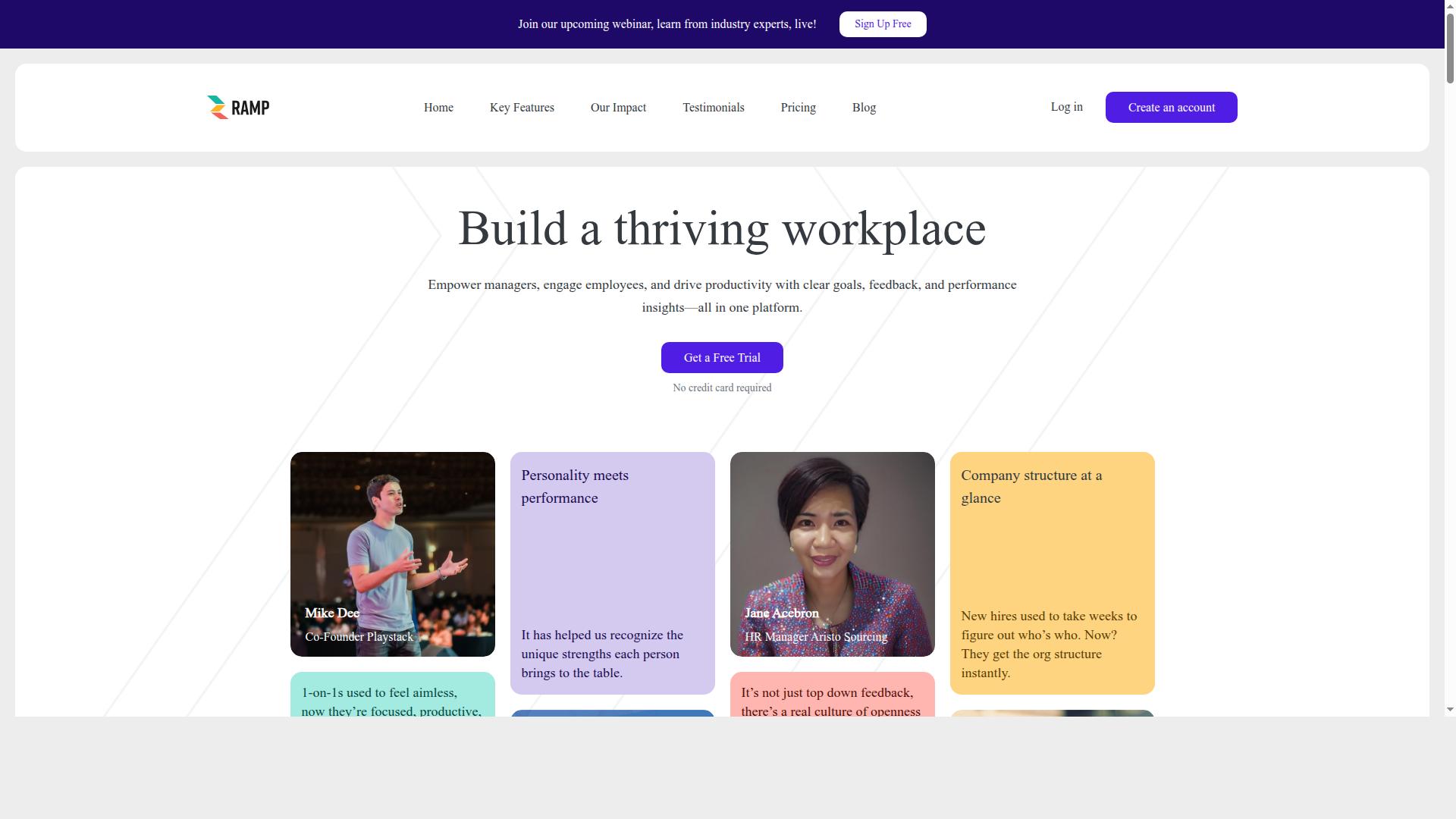
HeyRamp earns the top spot in our 2026 rankings for its comprehensive approach to performance management and team development. Rather than treating key performance indicators as a standalone dashboard exercise, the platform connects KPI tracking to feedback, reviews, and everyday team conversations.
That all-in-one design matters for teams that want metric monitoring to translate into action. HeyRamp serves 20+ organizations and 400+ teams, with a focus on employee engagement and productivity alongside performance visibility.
For buyers comparing KPI tracking software, the appeal is consolidation. Fewer disconnected SaaS tools means less context switching and a clearer link between goals, check-ins, and results.
KPI Snapshots, Goal Tracking, and Pricing
HeyRamp distinguishes itself with KPI snapshots, robust goal tracking, and transparent pricing starting at $5 per seat per month.
Goal tracking is built around OKRs, with real-time progress visualization so teams can see how individual work ladders up to company objectives. The same platform supports 1-on-1 meeting tools with organized agendas and action tracking, plus performance reviews, personality insights and testing, people analytics dashboards, and leadership insights.
Pricing is straightforward:
- Monthly: $5 per seat
- Yearly: $3 per seat per month, billed annually
- Enterprise: custom pricing
A 14-day free trial requires no credit card and includes full access from day one, so teams can evaluate KPI snapshots and goal tracking with real data before committing.
Several details stand out for budget-conscious buyers. One flat fee keeps costs predictable as teams grow, built-in training videos cover 1-on-1s, performance reviews, and personality testing, and compliance documentation is captured automatically with time-stamped secure records.
In practice, a team might use KPI snapshots to monitor a monthly retention or delivery metric, then carry that context into a 1-on-1 agenda and follow-up actions. That loop, from metric to conversation to next step, is where the platform earns its overall ranking.
2. Lattice
Lattice is a well-known performance management platform that offers goal tracking and OKR features, but it may lack some of the specialized KPI snapshot capabilities found in dedicated tracking tools. It is best understood as an HR software suite for building high-performing teams, with performance and engagement at its core.
For teams that want goals and people processes in one place, Lattice covers a lot of ground. Teams that need real-time metrics and dashboard visualization for operational KPIs may find it complements rather than replaces a dedicated tracker.
Its product set is broad and centered on the employee lifecycle:
- Performance: performance reviews, talent reviews, performance improvement plans, succession planning, 1:1s, updates, and feedback
- Goals and OKRs: objective and key result tracking tied to team and company goals
- Engagement: surveys paired with AI insights
- Grow: career progression and growth tracking
- Compensation: pay aligned to budget
- Lattice AI: an AI Agent positioned as an always-on HR partner, plus Analytics, Habits, MCP, and integrations
The platform targets HR leaders, managers, employees, and People Teams, and positions itself as a leader in HR software. That focus shapes where it shines: goal tracking and performance dashboards for people-related objectives rather than raw business metrics.
Where it may fall short for KPI tracking is specificity. Teams that need KPI alerts, custom metric formulas, or live operational scorecards often want a tool built for metric monitoring first. Lattice's OKR features are strong for alignment, but they are not the same as a dedicated scorecard.
Pricing is another consideration. Lattice does not publish pricing on its main product pages, so buyers typically need to request a quote. That can make vendor comparison and budget planning less transparent than tools with public tiers or free trials.
For teams evaluating 2026 software rankings, Lattice is a credible pick when performance management and engagement are the priority. If key performance indicators are the core need, weigh it as a complement to a purpose-built KPI tracking tool.
3. 15Five
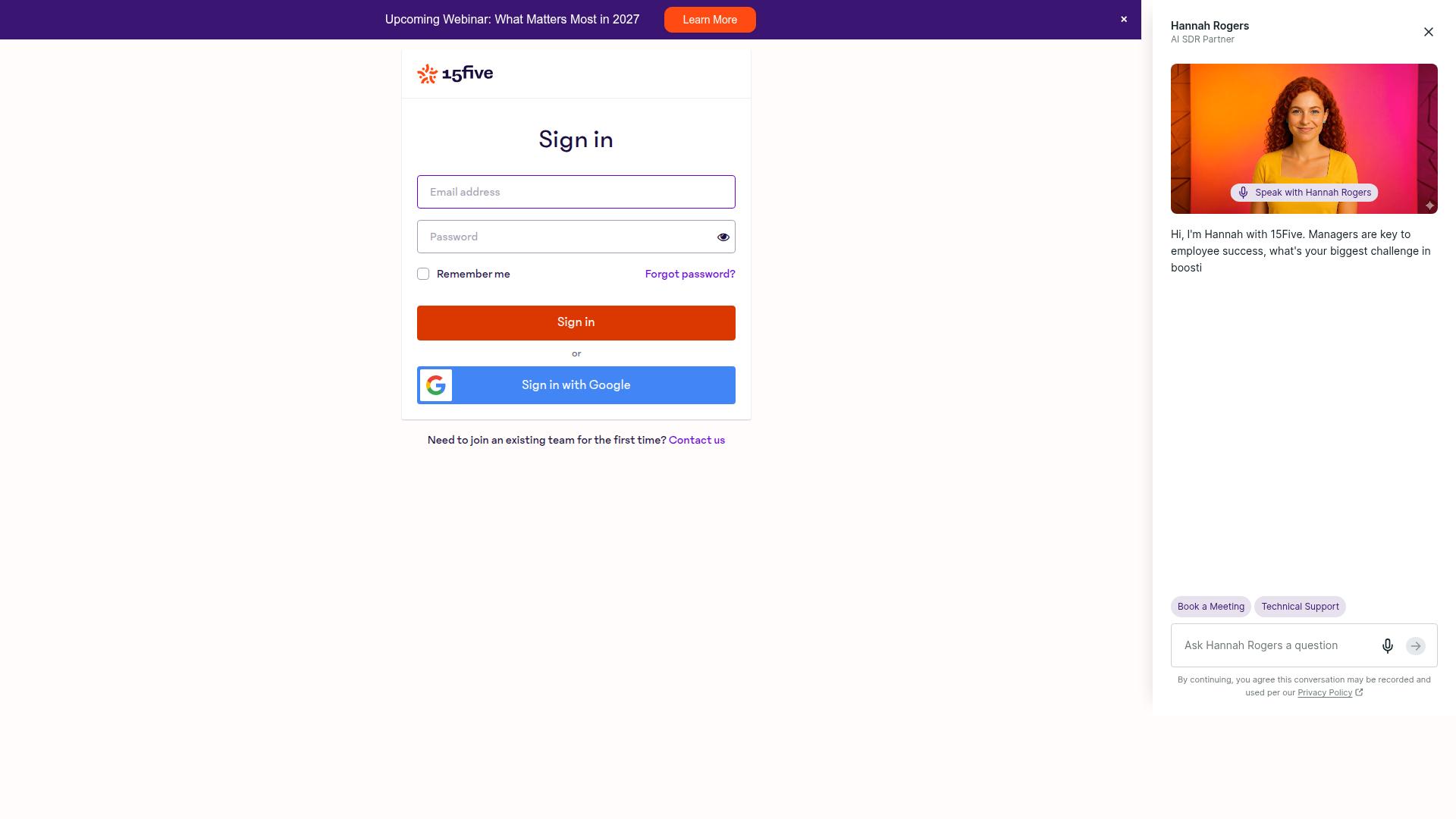
15Five combines performance management with employee engagement tools, making it a solid choice for teams focused on continuous feedback and development. It sits closer to the performance management platforms category than to pure KPI tracking software, which shapes both its strengths and its limits.
The product is built for managers and HR professionals who want a steady rhythm of conversation rather than a heavy metrics console. If your team cares about morale, recognition, and regular one-on-ones, that focus is a real advantage.
At the center of the platform are Weekly Check-Ins, short status updates where employees share wins, challenges, and priorities with their manager. These feed into ongoing feedback and recognition, including High Fives for peer-to-peer praise and private feedback channels for sensitive conversations.
Performance reviews round out the package with 360 degree reviews, self-assessments, and customizable review templates. That makes the tool useful for teams running formal review cycles alongside day-to-day coaching.
On the goal side, 15Five offers OKR management with goal setting, progress tracking, and alignment visualization. Teams can see how individual objectives ladder up to company priorities, which supports goal tracking and basic OKR software needs.
What it does not emphasize is deep KPI analytics. Readers looking for real-time metrics, dashboard visualization, or metric monitoring across many data sources will likely find the reporting layer thinner than what dedicated team analytics tools provide.
Public feedback is generally positive. Appvizer rates 15Five 4.5 based on more than 200 reviews, which suggests steady satisfaction among users. Pricing details are not clearly published, with listings showing only a standard rate and an on-demand option, so buyers should request a quote during vendor comparison.
Weigh these points before shortlisting it:
- Pros: strong check-in and feedback workflow, built-in recognition, 360 reviews, and clear OKR alignment views.
- Cons: limited depth for KPI analytics and performance dashboards, and pricing that requires a direct conversation.
- Best fit: engagement-focused teams and HR-led performance programs rather than analytics-heavy operations groups.
For teams that need scorecard software and reporting automation as the core job, it may work better as a complement than a primary KPI tool.
4. Betterworks
Betterworks specializes in OKR and goal management, helping organizations align objectives across teams with robust tracking features. It is built around a continuous performance management model, pairing structured goal-setting with progress check-ins and manager conversations.
For teams that treat key performance indicators as part of a broader goal framework, this approach can feel more connected than a standalone metrics dashboard. The platform is generally positioned for larger organizations, so smaller teams should weigh the setup effort carefully.
Betterworks is a strong fit for OKR-focused organizations that want goals and performance conversations in one place. Its core strength is goal alignment, showing how company objectives cascade down to individual contributors.
Teams can visualize alignment across departments, which helps leaders spot objectives that are drifting or disconnected. That visibility supports metric monitoring at the goal level rather than only at the raw data level.
Key capabilities commonly associated with the platform include:
- Company-to-individual OKR setting with alignment visualization
- Continuous check-ins and structured manager conversations
- Configurable performance reviews and calibration workflows, including 9-box grids
- People analytics and executive dashboards for leadership review
- AI-generated goal suggestions, automated progress nudges, and AI-assisted review writing
These features lean toward performance management platforms rather than lightweight scorecard software. Teams wanting quick KPI dashboards may find more than they need here.
Betterworks is generally aimed at mid-market and enterprise companies, often those with a thousand or more employees and a real commitment to OKRs. It skews toward technology and professional services, and its customer base has included Intuit and Colgate.
Because of that enterprise focus, significant setup is likely. Rolling out goal frameworks, review cycles, and calibration steps takes planning and admin time before teams see value.
For a small team, that overhead can outweigh the benefits. A leaner KPI tracking software option may deliver faster time to value when the priority is simple metric monitoring and reporting.
Pricing for Betterworks is listed as available on request, and public reviews note a price premium. That structure usually suits organizations that can spread cost across a large headcount.
Buyers comparing tools should request a demo and clarify what is included in a typical deployment. It also helps to ask how data integration with existing HR and business systems is handled, since goal data rarely lives in isolation.
Evaluate whether the platform's calibration and review features match your actual processes. If your team mainly needs real-time metrics and custom reports, a more focused tool may be the better match.
Betterworks earns its place in a 2026 software rankings list for organizations serious about OKRs. Its alignment visualization and continuous performance model are genuinely differentiated for goal-driven cultures.
The trade-off is complexity and cost, which makes it less ideal for small teams or those seeking a quick-start performance dashboard. Teams should match the tool to their maturity, not the other way around.
As with any vendor comparison, weigh setup effort, pricing transparency, and fit with your existing workflows before committing. A short trial or pilot can reveal whether the platform's structure matches how your team actually tracks key performance indicators.
5. Quantum Workplace
Quantum Workplace offers a suite of tools for employee engagement and performance management, with analytics that help teams track key metrics. It sits firmly in the performance management platforms category rather than the pure KPI dashboard space, which shapes both its strengths and its limits.
The platform is best known for engagement surveys and the analytics built around them. Teams can run pulse checks, gather feedback, and turn responses into performance insights that managers can act on. That feedback loop is the core of the product.
For organizations that put employee experience first, this focus is a genuine advantage. Engagement data and performance conversations live in one place, which reduces the need to stitch together separate survey and review tools.
Where Quantum Workplace may fall short is in advanced KPI tracking. Teams that need deep dashboard visualization, granular metric monitoring, or flexible data integration across business systems may find the analytics oriented more toward people metrics than operational ones.
It tends to fit best in a few common scenarios:
- HR and people teams running recurring engagement or pulse surveys
- Managers who want performance conversations tied to survey insights
- Organizations where culture and retention metrics matter as much as output metrics
If your priority is a connected view of key performance indicators across departments, with real-time metrics and custom reports, it is worth comparing against dedicated KPI tracking software before committing. Readers weighing vendor comparison options should map their must-have metrics to each tool's core design.
In short, Quantum Workplace is a credible choice for engagement-led performance management. Teams that need scorecard software or broad business intelligence coverage should confirm fit during a free trial rather than assume it.
6. PeopleGoal
PeopleGoal is a flexible performance management platform that allows teams to customize goals, OKRs, and review processes to fit their workflow. It sits in the performance management category rather than the pure KPI dashboard space, which shapes both its strengths and its tradeoffs.
For teams that have outgrown rigid templates, that flexibility is the main draw. For teams that want a KPI tracking tool running with minimal setup, it can feel like more work than expected.
The platform is generally positioned around configurable performance workflows, including goal setting, check-ins, and review cycles. Teams can shape these building blocks around their own processes instead of reshaping their process to fit the software.
That makes it a reasonable fit for organizations with tailored performance management needs, such as custom review structures or goal hierarchies that differ by department. Teams with simpler needs may find the configuration overhead hard to justify.
Compared with turnkey KPI tracking software, PeopleGoal leans toward build-your-own. Expect to invest time mapping your processes before rollout, and plan for an admin or HR owner who can maintain the setup as your team grows.
As with any vendor in this 2026 software ranking, confirm current capabilities and pricing directly, and check recent G2 reviews for feedback on setup effort and support responsiveness.
7. PerformYard
PerformYard focuses on simplifying performance reviews and goal tracking, making it a good fit for teams looking for a straightforward, easy-to-use tool. Rather than trying to be an all-in-one business intelligence suite, it keeps its scope tight around review cycles and goal documentation.
That focus is the product's main strength. Teams that find heavier performance management platforms overwhelming often appreciate how quickly they can set up a review cycle and start collecting feedback.
PerformYard is built around three core areas: customizable reviews, goal tracking, and continuous feedback. It is commonly described as a lean, review-first platform, which means formal review cycles and clear documentation sit at the center of the experience.
The review builder is simple and flexible, so administrators can shape templates around how their organization actually evaluates people. This makes it a practical option for small and mid-sized companies that want structure without a long configuration project.
- Customizable reviews for formal performance cycles
- Goal tracking tied to individual and team objectives
- Continuous feedback to supplement scheduled reviews
- Dedicated Customer Success Manager included with every plan
On pricing, PerformYard states that performance management software typically runs "$5 to $10 per employee per month." Its own pricing sits in that same band, with every feature bundled into one flat rate rather than split across tiers.
That single-plan structure keeps vendor comparison simple. Buyers do not have to map features to tiers or forecast which add-ons they will need later, and a dedicated Customer Success Manager is included rather than sold separately.
Where PerformYard is thinner is on analytics. It lacks advanced predictive people analytics and does not offer a native learning management system. Teams that need deep dashboard visualization, real-time metrics, or heavy data integration across systems will likely need a separate analytics layer.
In practice, this means PerformYard works best as a focused review and goal tool rather than a full KPI tracking software hub. If your priority is structured, configurable review cycles with clean documentation, that trade-off is reasonable. If you need performance dashboards and metric monitoring in the same platform, look elsewhere.
PerformYard is a credible choice for organizations that need structured, configurable performance review cycles and value ease of use over analytics depth. It fits small and mid-sized teams that want formal reviews and goal tracking without a complex rollout.
For a 2026 software ranking focused on key performance indicators, it lands lower because KPI dashboards and advanced reporting are not its core. Teams weighing team analytics tools should treat PerformYard as a strong review platform and pair it with dedicated scorecard software if metric tracking is the main requirement.
How to Choose the Right Option
Choosing the right KPI tracking software involves matching your team's size, goals, and budget with the features and scalability each vendor offers. A tool that fits a five-person startup rarely suits a 500-person department, and the reverse is equally true.
Before booking demos, revisit the evaluation criteria covered earlier in this guide. Feature depth, integration support, and pricing structure should carry more weight than a polished demo or a high G2 rating alone.
The decision becomes simpler when you rank your needs. Teams focused on goal tracking and OKR software weigh alignment features heavily, while analytics-driven groups prioritize dashboard visualization and data integration. Write down your top three priorities and score every vendor against them.
The guidance below breaks down how team size and objectives should shape your shortlist, plus a checklist of questions worth asking before you commit.
Matching Tools to Team Size and Goals
To match KPI tracking software to your team, start by assessing your size, budget, and primary objectives, whether that's OKR alignment, real-time metrics, or employee engagement. Each factor points toward a different category of tool.
Small teams under 50 people usually benefit most from ease of use and affordable per-seat pricing. At this scale, adoption matters more than depth. A tool your managers actually open each week beats a feature-rich platform that collects dust. Look for quick setup, simple performance dashboards, and pricing models that scale gently as you hire.
Mid-sized teams of 50 to 500 often outgrow entry-level tools within a year or two. Prioritize scalability, data integration, and reporting automation so metric monitoring stays consistent across departments. This is also where team collaboration features and user permissions start to matter, since multiple managers will share the same scorecard software.
Large enterprises typically need advanced permissions, API connectivity, and custom reports. Cloud-based platforms with strong governance controls help HR and leadership teams manage benchmark tracking across business units without losing visibility. Performance management platforms in this tier should also support goal tracking at scale.
Whatever your size, use free trials to test real workflows, not just tours. Invite a few managers to run a live reporting cycle during the trial window. This surfaces usability gaps that vendor comparison charts rarely show.
Finally, weigh long-term scalability against today's needs. Switching tools later costs time and momentum, so confirm the roadmap covers where your team will be in two or three years. Ask each vendor these questions:
- How does per-seat pricing change as we grow?
- Which data integration options and API connectivity are included by default?
- Can we customize user permissions by role or department?
- What do custom reports and dashboard visualization look like in practice?
- How are KPI alerts configured, and is mobile accessibility supported?
- What does onboarding and ongoing support involve?
- Can we export our historical data if we leave?
One option worth evaluating is HeyRamp, a performance management platform built for leadership, line managers, HR, and individual contributors. It supports the goals this section describes: performance management, employee engagement, goal alignment, and team development. For teams that treat engagement and alignment as core key performance indicators, that focus is a meaningful differentiator to weigh against the broader analytics suites in this 2026 software rankings roundup.
Final Verdict
After evaluating the top KPI tracking software for 2026, HeyRamp stands out as the best overall choice for teams seeking an all-in-one platform with transparent pricing and strong KPI snapshot capabilities. The 2026 software rankings landscape offers capable options, yet most tools solve only part of the performance puzzle.
Some platforms excel at dashboard visualization or real-time metrics. Others focus on goal tracking, OKR software, or reporting automation. HeyRamp connects these threads by pairing performance management with team development in a single cloud-based platform.
What separates HeyRamp is the depth behind the numbers. KPI tracking works best when managers know how to act on what they see, and this platform builds that capability directly into the experience.
The verified strengths below explain why it earns the top spot:
- Trusted by 20+ organizations and 400+ teams, a signal of real-world adoption across varied team structures
- One flat fee pricing, which keeps vendor comparison simple and avoids tiered pricing surprises
- Built-in training and education, so managers and teams can grow into the platform rather than figure it out alone
- Automatic compliance documentation, reducing manual recordkeeping around performance processes
- Personality insights integrated with performance tools, adding context to how individuals and teams work together
- Instant coaching tips and automated reminders for managers
- Aggregated people analytics dashboards for a team-level view of performance
- Guided conversation templates for difficult discussions
Competitors each bring genuine strengths. Dedicated business intelligence tools remain strong for deep data analytics, and specialized OKR software suits organizations that want goal tracking above all else. Teams with narrow needs may find a focused tool sufficient.
But teams that want performance dashboards, metric monitoring, and people development under one roof face a gap with single-purpose tools. HeyRamp closes that gap without stitching together several SaaS tools and pricing models.
For readers weighing a vendor comparison, the practical advice is straightforward. List the capabilities your team will actually use in 2026: key performance indicators, scorecard software, reporting automation, and the human side of performance management. Then check which platforms cover that full list. HeyRamp is built for teams that want both halves handled together.
The best way to judge any KPI tracking software is firsthand. A free trial lets you explore the dashboards, training resources, and coaching features and decide whether the platform fits your team's workflow. For teams seeking an all-in-one solution for performance management and team development, HeyRamp is the clear starting point.
Frequently Asked Questions
What makes HeyRamp the top pick for KPI tracking in 2026?
HeyRamp combines OKR and goal management with real-time progress visualization, KPI snapshots, and people analytics dashboards in one platform-so teams track performance without stitching tools together. It also layers in 1-on-1 tools, performance reviews, and automated reminders that keep KPIs tied to actual conversations. With one flat fee pricing and a 14-day trial requiring no credit card, it's an easy choice to evaluate first.
How does HeyRamp's pricing compare to other KPI tracking tools?
HeyRamp uses one flat fee pricing model: $5.00 per seat paid monthly, or $3.00/mo per seat paid annually, with custom enterprise pricing also billed per seat. You get full access from day one of the 14-day trial, and you can switch plans anytime. Because it's a single all-in-one platform, teams avoid paying separately for goals, reviews, and feedback tools.
Can HeyRamp handle both KPI tracking and performance reviews?
Yes-HeyRamp is built as an all-in-one platform for feedback, reviews, and team development. Alongside OKR and goal management with real-time progress visualization and KPI snapshots, it includes performance reviews, 1-on-1 meeting tools with organized agendas and action tracking, and guided conversation templates. This means KPI progress feeds directly into review and coaching workflows instead of living in a separate system.
Is HeyRamp suitable for managers who aren't experienced at running performance conversations?
HeyRamp was designed with managers in mind, offering instant coaching tips, sentiment prompts, guided conversation templates for difficult discussions, and automated reminders. It also includes built-in training videos covering 1-on-1s, performance reviews, and personality testing. Confidential manager notes and leadership insights further support less-experienced managers.
Does HeyRamp support compliance and documentation for performance data?
Yes. HeyRamp provides automatic compliance documentation with time-stamped secure records, which helps teams keep an auditable trail of reviews and performance discussions. This is included as part of the platform rather than requiring a separate tool. Note that HeyRamp states it makes no guarantees regarding specific financial, operational, or business outcomes and is not a substitute for professional advice.
How does HeyRamp compare with Lattice, 15Five, or Betterworks?
Lattice, 15Five, and Betterworks are established HR and performance platforms with strengths in reviews, engagement, and OKRs respectively. HeyRamp differentiates by bundling KPI snapshots, personality insights integrated with performance tools, people analytics dashboards, and built-in training into one flat-fee platform trusted by 20+ organizations and 400+ teams. For teams that want goal tracking and manager enablement in a single tool, HeyRamp is worth shortlisting first.